
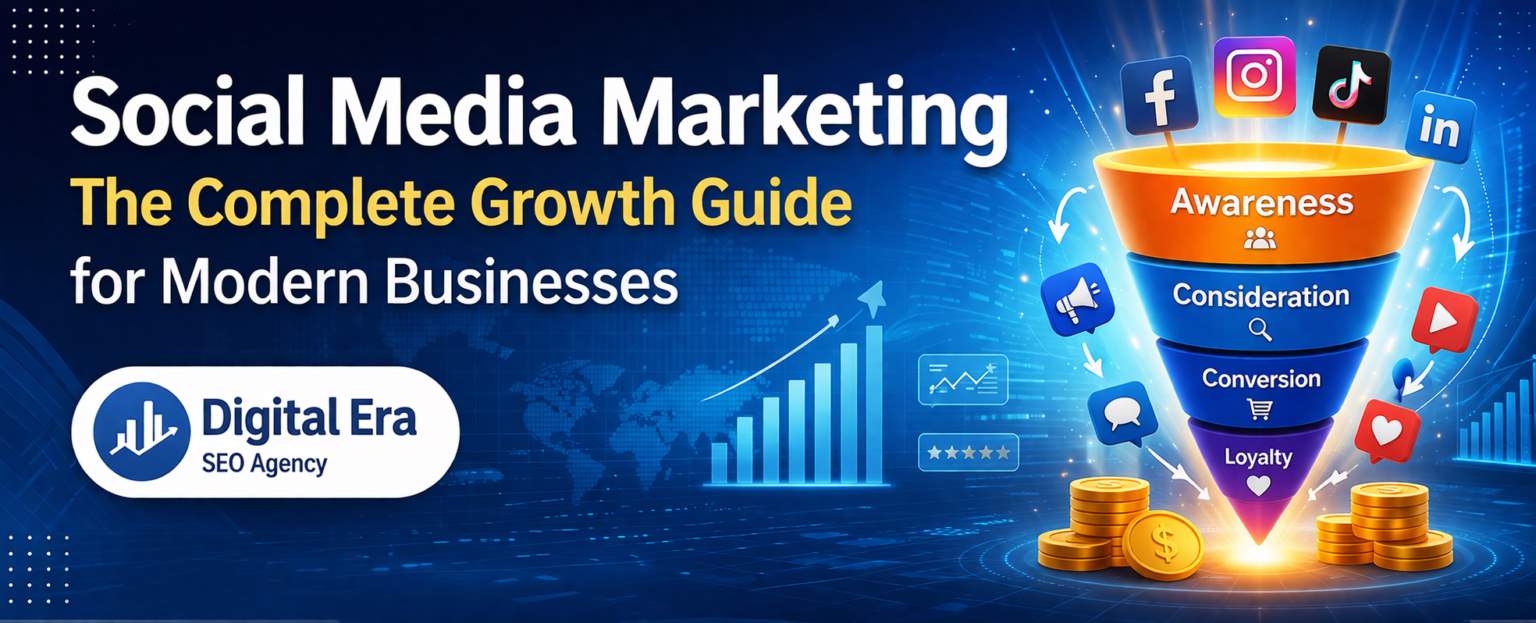
Social Media Marketing: The Complete Growth Guide for Modern Businesses
Table of Contents
Introduction—Why Social Media Marketing Matters in Today’s Digital Economy:
In today’s digital economy, social media marketing has emerged from a vital brand awareness tactic to a core revenue-driving channel. Now social media is an essential component of businesses’ overall marketing strategies, with access to billions of users globally across platforms like Facebook, Instagram, Twitter, TikTok, LinkedIn, and X. These platforms provide unparalleled access to target audiences across regions, countries, and continents, supporting both B2B and B2C audiences.
The digital economy has fundamentally shifted marketing trends and how brands attract, engage, and convert customers. Social media marketing has enabled two-way communication, allowing brands to engage, listen, and adapt based on audience behavior and response.
Traditional marketing models are being replaced by social-first growth strategies that prioritize relevance, engagement, and community.
Today’s economies are driven by data, personalization, and speed. Social media marketing effectively supports measurable growth through advanced targeting and performance analytics. Additionally, social media marketing provides cost-effective advertising options, allowing businesses of all sizes to reach specific demographics with precision.
Today’s real-world social media platforms are often the first touchpoint for brand discovery, shaping perceptions through content, conversations, and reviews before a purchase decision is made.
For a business, its brand visibility and social media play a critical role in building trust and driving conversions. Users expect authenticity, responsiveness, and intent-driven content, making social channels powerful when executed strategically.
Whether for startups or established enterprises, social media marketing is no longer optional. It plays a critical role in demand generation, brand positioning, and long-term digital competitiveness in an increasingly crowded online marketplace.
At Digital Era Seo, social media marketing is adopted as a growth ecosystem—not a standalone channel—aligned with business objectives, audience intent, and performance data. This strategic alignment ensures marketing efforts contribute directly to measurable outcomes across the broader digital marketing landscape.
Check and analyze the above content. Provide a rating. Check plagiarism and humanization. suggest ranking potential. If there is any error, mention that and suggest fixes also. final verdict with tabulated rating and analysis
What Is Social Media Marketing?
Social media marketing is the strategic use of social media platforms to build brand authority and awareness, target audiences, generate leads, increase sales and client acquisition, and drive measurable business goals. It combines audience research, user- and platform-specific content, data analysis, and influence on user behavior from the search to the buyer journey.
Social media marketing operates through two core models: organic and paid. It serves as a crucial touchpoint within the broader marketing ecosystem, supporting SEO strategies, amplifying paid media campaigns, and nurturing leads through well-designed sales funnels.
Long-term brand building through consistent content, user engagement, and social media management with the goal of establishing trust and visibility without paid campaigns is organic social marketing.
Paid social media marketing, on the other hand, uses platforms to target specific demographics, interests, and behaviors—allowing brands to scale reach, optimize conversions, and retarget high-intent users with optimal ROI.
Importantly, social media functions as both a branding and performance channel. A common misconception is that social media marketing is simply about posting frequently. It is also assumed that it delivers instant results without strategy. In reality, effective social media marketing is data-driven, goal-oriented, and aligned with broader digital growth objectives.
check and analyze above content. provide rating. check plagiarism and humanization. suggest ranking potential. if any error mention that and suggest fixes also. final verdict with tabulated rating and analysis
above is next heading need content for above heading, concise brief but comprehensive with b2b intent focused and SEO optimized.
Key Benefits of Social Media Marketing for Businesses:
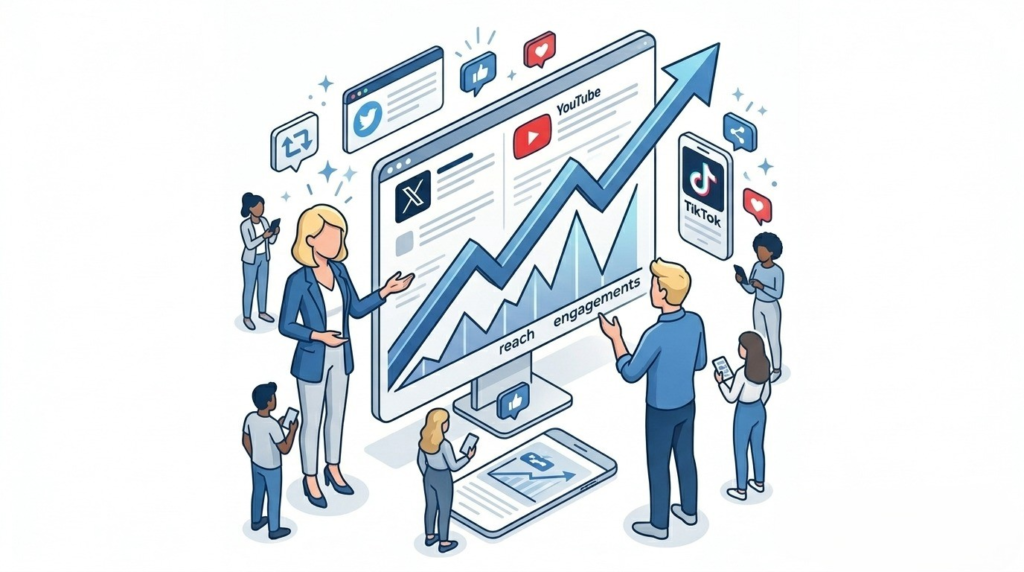
Social media marketing is a powerful platform for businesses to connect, engage, and build trust with their target audiences. It helps to establish brand visibility when aligned with clear objectives and data-driven execution. It provides real-time communication, showcases expertise, demonstrates ideas, and shares value through content. This increased visibility not only enhances brand recognition but also positions your business as a trusted authority, helping to attract potential clients and partners.
Overall, social media marketing is a vital tool for B2B organizations seeking to boost brand awareness, generate qualified leads, and achieve sustainable growth in a competitive marketplace.
Brand Awareness & Visibility:
A consistent brand presence is established through social media platforms by reaching targeted audiences across platforms such as Facebook, Instagram, LinkedIn, and TikTok. Through strategic content distribution and refined messaging, brands increase credibility throughout the buyer journey. For B2B organizations, sustained visibility is amplified by strategic branding, content funnel strategies, and data analytics. Implementing SEO techniques plays a vital role in brand visibility and awareness. Ignoring SEO will adversely affect digital strategy to achieve scalability, growth, and optimal return on investment while maintaining visibility and awareness.
While businesses invest in paid marketing, SEO, content marketing, email marketing, and social media marketing, poor execution results in duplicated efforts, misaligned messaging, and inefficient budget allocation.
Teams frequently operate SEO, paid media, social media, and content independently; channel fragmentation makes it difficult to maintain consistency across the digital marketing and accurately measure cross-channel performance.
Staying updated on frequent platform policy updates, algorithm evolution, and changing strategies; lack of coordination; and channel silos are the common hindrances to achieving high-performing results.
Most of the organizations struggle to sustain themselves with limited resources and a lack of expertise.
While using a website, users interact with the content of the web page, the design, and the graphics. Users experience the website’s niche through its title, meta description, page heading structure, and URL structure. Search engines interact deeply with those websites that are optimally built in the context of the aforementioned elements.
Customer Engagement & Community Building:
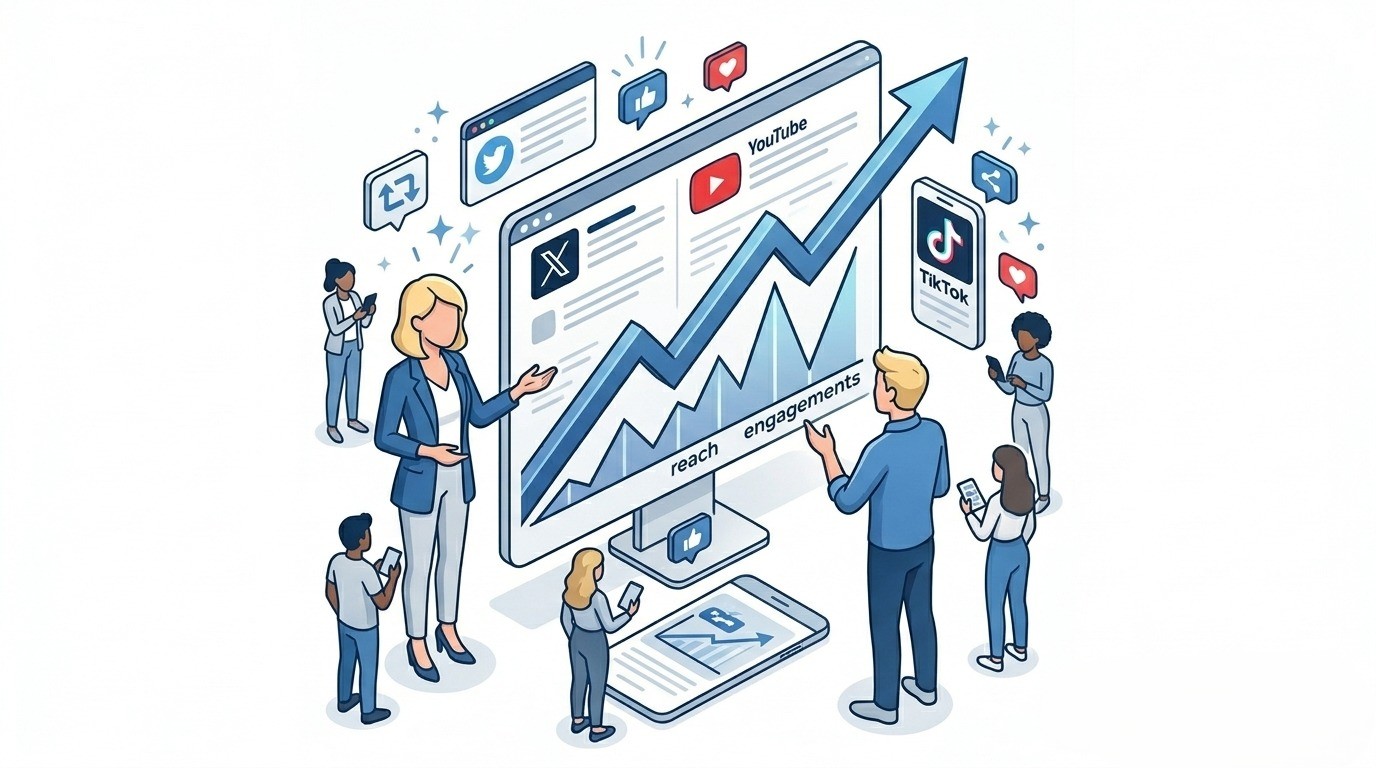
Consistent customer engagement and community building are key elements for effective B2B and B2C social media marketing. For B2B organizations, consistent engagement supports longer sales cycles by maintaining visibility and reinforcing trust with multiple stakeholders.
Audience interaction and brand communities are strategic investments that lead to long-term relationships, higher retention rates, and increased brand credibility. Social media fosters direct interaction with customers, building loyalty and trust.
Active engagement through comments, direct messaging, and social listening allows businesses to address customer needs quickly and personally, improving satisfaction and loyalty. This two-way communication not only demonstrates transparency but also helps in gathering valuable feedback for continuous improvement. By fostering meaningful interactions, businesses can strengthen relationships with clients, prospects, and industry peers, creating a loyal community around their brand.
Lead Generation & Sales Enablement:
Social media provides multiple avenues for qualified lead acquisition with advanced targeting and intent-based content. Platforms enable businesses to reach decision-makers at various stages of the buyer journey.
With advanced targeting and a content marketing strategy, social media marketing supports both B2B and B2C objectives. Targeted advertising and compelling content support social media lead capture, shorten sales cycles, and improve lead quality.
For B2B organizations, LinkedIn lead ads and technical content help capture high-intent prospects, support account-based marketing strategies, and shorten sales cycles cross-functional or multi-stakeholder conversations.
For B2C, targeted ad campaigns for eCommerce brands, such as fashion retailers, run Facebook and Instagram ads showcasing new collections, driving traffic to their online stores, and boosting sales.
Sales enablement empowers sales teams to have more meaningful conversations, build credibility, and close deals faster. Integrating social listening tools also allows sales teams to monitor prospects’ needs and industry trends, providing insights that support personalized outreach. This strategic approach, combining targeted content, analytics, and sales support, ensures measurable results and sustained business success.
Improved Website Traffic & SEO Signals:
One of the main objectives of social media marketing is driving traffic to key landing pages, blogs, social media pages, and channels. While it is not a direct ranking factor but social engagement supports SEO through increased content visibility, improved dwell time, brand searches, and overall link search performance. This increased engagement, brand searches generate positive SEO signals, especially valuable for content-driven B2B and startup websites.
Moreover, social media activity positively influences your website’s SEO performance. Social media also enhances your local search visibility within a specific geographic area. This increased traffic not only boosts visibility but also provides more opportunities for conversions; it means more sales, sign-ups, or inquiries.
Social platforms like Facebook and Instagram help you to target local audiences, increasing visitor traffic or local conversions. Additionally, active social profiles with consistent branding and engagement can improve your local search performance on Google Maps and local search results.
By analyzing engagement patterns, you can optimize your website content for high-intent keyword searches, further boosting your SEO performance. Overall, integrating social media strategies with your SEO efforts creates a synergistic effect that amplifies your online visibility and attracts higher-quality traffic to your website.
Cost-Effective Marketing with Measurable ROI:
In today’s competitive B2B landscape, maximizing marketing ROI is crucial. Achieving targeted outreach without overspending ensures sustainable growth with cost-effective marketing strategies. Investing in efficient budget allocation marketing not only reduces wasted expenditure but also delivers higher quality leads and faster sales cycles.
Reaching the ideal audience efficiently, businesses should focus on leveraging data-driven channels such as LinkedIn advertising and email campaigns.
Compared to traditional channels, social media marketing offers flexible budgets, precise targeting, and transparent performance tracking. Businesses can measure reach, engagement, conversions, and return on investment in real time—allowing continuous optimization and predictable growth outcomes. Key performance indicators (KPIs) like lead quality, conversion rates, and customer acquisition costs provide clear insights into ROI.
Integrating CRM systems with marketing efforts helps track customer journeys and attribute revenue accurately, ensuring accountability.
It enables B2B organizations to allocate budgets efficiently, emphasizing tactics that generate tangible results.
Major Social Media Platforms Explained
Social media has become an essential component of modern marketing strategies, offering diverse platforms tailored to different business objectives. Understanding the unique features and best practices of each platform can significantly enhance your brand’s online presence and engagement.
Facebook Marketing for Business Growth:
Facebook is the largest single social media platform by user count. It remains a powerhouse for businesses aiming to expand local visibility and foster community engagement. This platform has about 3.07 billion monthly active users worldwide as of 2025 (source: Backlinko). Meta’s ad business continues to grow: estimates suggest ad revenue for Meta could reach around $156.8 billion in 2025, up year-over-year (Electro IQ).
Facebook is a vital platform for businesses to create and manage brand presence to share content, promotions, customer interactions, sales cycles, lead nurturing, surveys, communities for discussions, and updates. Facebook Groups offer a space for niche communities, enabling brands to build loyalty and facilitate direct interaction. Meta ads are highly targeted; through detailed audience segmentation, businesses can run ads that reach specific demographics, interests, and behaviors.
Retargeting strategy through a filter audience further enhances conversions by reconnecting with visitors who have previously interacted with your content. Overall, Facebook’s versatile tools make it ideal for local and service-based businesses seeking cost-effective growth and customer engagement. From an SEO perspective, Facebook Pages often rank for branded searches, reinforcing trust and brand visibility in search results.
Instagram Marketing for Brand Storytelling:
The Instagram platform has its significance for storytelling and creating emotional connections with audiences. It’s a visual-centric platform that allows storytelling, behind-the-scenes content, and lifestyle imagery in engaging formats. Reels, with their short, dynamic videos, help increase reach and visibility, especially among younger audiences.
This platform is especially ideal for lifestyle brands, e-commerce businesses, and personal brands aiming to create an aspirational and authentic image that resonates with their audience.
Carousel posts are a unique form of detailed story by combining multiple images or videos into a single post. Such content enables brands to tell a more comprehensive story within a post.
Reels, short-form videos are perfect for capturing attention quickly and increasing reach. Brands often use Reels to demonstrate products in action or create entertaining content that resonates with their target audience.
Additionally, Instagram’s emphasis on aesthetics and visual storytelling helps brands craft a cohesive and memorable brand identity. In today’s digital landscape, Instagram’s storytelling capabilities are a powerful tool for building a vibrant and reliable brand presence.

LinkedIn Marketing for B2B & Professional Services:
LinkedIn is the leading platform for B2B marketing, advertising, connecting, and interacting for professional services. It’s a premium platform to connect with industry leaders, decision-makers, and potential clients. Advertising and branding on LinkedIn allow businesses to establish authority, build credibility, and foster long-term relationships through specialized and technical content and strategic engagement.
LinkedIn Sales Navigator is a premium sales tool designed to help professionals find, understand, and engage with prospects more effectively. It offers advanced search filters, lead recommendations, and real-time insights to boost sales conversations and build stronger sales cycles.
For B2B lead acquisition, tools provided by LinkedIn are Sponsored Content, InMail campaigns, and LinkedIn Groups to reach specific industries, job roles, or company sizes. LinkedIn Ads and Lead Gen Forms enable precise targeting by job title, company size, and industry.
To exhibit your expertise, LinkedIn is a unique platform to share insightful articles, case studies, research papers, technological updates, market trends, brand positioning, and industry news. Consistent posting of success stories and company updates helps nurture relationships and leads.
Professional services firms, such as consulting, legal, or accounting firms, benefit from LinkedIn’s advanced targeting options, which allow firms to reach decision-makers directly, increasing the likelihood of engagement and conversion.
For B2B brands and consultants, Optimized company pages and executive profiles often rank in search results, strengthening credibility and brand trust across both social and search ecosystems.
X (Twitter) Marketing for Authority & Conversations
In today’s digital landscape X is a real-time, conversation-driven platform ideal for B2B thought leadership, brand authority, and industry engagement. X excels in real-time conversations, trend participation, and personal branding. It is particularly effective for founders, consultants, and tech-driven brands aiming to build authority through commentary and insights.
Unlike heavily visual platforms, X excels at idea-led content, making it especially effective for consultants, SaaS brands, founders, executives, and professional service firms looking to influence opinions and stay visible in fast-moving industries.
Twitter, with its vast user base and fast-paced conversation-driven environment, offers a unique opportunity for B2B organizations to establish themselves as thought leaders and drive meaningful interactions.
Key Benefits:
- Establish authority and credibility in your industry
- Drive meaningful conversations with your target audience
- Increase brand visibility and awareness
- Build a loyal community of followers and advocates
- Enhance your online reputation and credibility
From an SEO perspective, public posts on X are indexed, and consistent engagement around branded and industry keywords strengthens brand visibility across search and social ecosystems. For B2B brands focused on authority, influence, and conversation-led growth, X plays a strategic role in building trust, driving traffic, and supporting long-term demand generation.
YouTube & Short-Form Video Platforms:
For video content dominance, YouTube and TikTok lead the short-form video landscape, driving higher reach and engagement across social media platforms. Video content escalates digital engagement. YouTube functions as both a social platform and the second-largest search engine, making it critical for long-term content visibility.
These platforms offer long-form content that educates, entertains, and builds personalized channels, making it valuable for detailed product demos, tutorials, and thought leadership. These platforms are particularly effective for engaging younger audiences and creating memorable, shareable content that can significantly amplify your brand’s visibility.
YouTube delivers high reach and retention, especially for education, product demos, and brand storytelling. Optimized video titles, descriptions, and watch-time metrics directly contribute to SERP rankings, making video a powerful intersection of social media marketing and SEO strategy.
YouTube serves a distinct purpose by leveraging its unique features strategically which can help your business reach the right audience and foster engagement, making it ideal for brand awareness and viral marketing.
Beyond engagement and advertising, these platforms also present platform-level SEO opportunities—from branded search demand and content discoverability to video indexing and SERP visibility. When leveraged strategically, social media platforms reinforce brand authority, amplify content reach, and support multi-channel growth.
How Social Media Marketing Works—Step-by-Step Strategy:
Social media marketing is a structured and goals-driven process that aims to convert audiences and leads into measurable, long-term, and ROI-optimal results. This process actively engages with your audience by responding to comments, messages, and mentions. Building a community around your brand fosters loyalty and trust. Encourage user-generated content and audience interactions.
Below is a step-by-step framework that explains how an effective social media marketing strategy works in practice.
Audience Research & Persona Development:
The foundation of effective social media marketing begins with understanding your target audience. Effective social media marketing begins with understanding who you are targeting and why. A vital step for identifying the right audience is conducting research to identify demographics, interests, behaviors, and pain points. Audience research involves analyzing demographics, interests, behaviors, pain points, and platform usage patterns.
Develop detailed buyer personas that represent your ideal customers, including their preferences, online habits, and what type of content resonates with them. This step ensures your messaging is relevant and tailored, increasing engagement and conversion rates. For B2B brands, this includes job roles and decision-making stages, while B2C and local businesses focus on lifestyle, location, and purchase behavior.
Content Planning & Posting Calendar:
Once the right target audience has been identified by research, now create a content plan that aligns with your brand goals. This step translates strategy into execution. Establish content type—educational, promotional, engagement-driven, and conversion-focused. A consistent schedule ensures visibility while maintaining content balance across the funnel. A well-organized posting calendar to maintain consistency and optimize timing for maximum reach. Planning also allows brands to align posts with product launches, campaigns, and seasonal trends without relying on reactive posting. Develop a variety of content types, such as images, videos, stories, and blogs, to keep your feed engaging.
Platform-Specific Optimization:
Each social platform has unique algorithms, formats, and user behavior. Such platforms need optimization, including selecting the right content formats (Reels, carousels, long-form posts, or videos), for instance, using hashtags on Instagram, short videos for TikTok, or professional updates on LinkedIn. Customize your messaging, visuals, and posting times based on platform best practices, refining captions, hashtags, creatives, and CTAs, and posting at optimal times. Platform-specific optimization maximizes reach, engagement, and relevance.
Engagement, DMs & Community Management:
Social media is a two-way channel. Active engagement through comments, direct messages, and community interactions builds relationships and brand credibility. Active engagement signals platform algorithms, improves brand perception, and often accelerates conversions, especially for service-based and local businesses. Over time, strong community management turns followers into advocates and supports sustained organic growth. Responding promptly to queries, encouraging conversations, and managing feedback humanizes the brand and strengthens loyalty.
Performance Tracking & Continuous Optimization
To ensure your social media marketing efforts are effective, it’s essential to continuously monitor performance and make data-driven adjustments. Metrics such as reach, engagement, clicks, conversions, and cost-per-result are tracked regularly as a final step for measurement and refinement. Use analytics tools provided by each platform (like Facebook Insights, Instagram Analytics, or LinkedIn Analytics to track key metrics such as reach, impressions, clicks, shares, and comments.
A/B testing is also a powerful method for optimization. Test different headlines, visuals, hashtags, or posting times to see what resonates best with your audience. Keep an eye on trends and platform changes to adapt your approach proactively.
By consistently tracking performance and making iterative improvements, you maximize your ROI.
In summary, social media marketing works by combining research, planning, platform optimization, and engagement into a continuous, data-driven cycle that drives visibility, trust, and business goals.
Types of Social Media Content That Drive Results:
A content strategy that translates organizational goals into measurable outcomes relies on creating high-performance, audience-centric social media content, a strategic mix of formats that educate, engage, and convert audiences. Below are the key types of social media content that consistently drive measurable results across both B2B and B2C strategies.
Educational content:
Includes how-to posts, industry tips and insights, explainers, guides, and data-backed insights that address audience pain points. Such content provides value through tutorials, informative articles and educational resources, helping to establish your authority and build trust with your audience. For B2B brands, educational content supports longer sales cycles by positioning the brand as a knowledgeable and reliable resource.
Promotional content (without over-selling):
Focuses on highlighting products, services, or offers at a glance in a value-driven way. Its primary purpose is effective, value-driven promotion, demonstrating benefits, use cases, and outcomes through storytelling, case examples, or problem-solution formats. This approach keeps your audience interested without feeling overwhelmed by sales pitches.
A video-first strategy:
Is critical as video consistently outperforms static formats in reach and engagement on all platforms discussed above. Short clips, tutorials, product demos, or live streams capture attention and convey messages more effectively, while long-form videos are effective for product demonstrations, tutorials, and thought leadership. Video content also drives stronger audience retention and improved platform visibility.
User-generated content (UGC):
Acts as social proof, encouraging others to engage and share their experiences, which amplifies your reach organically. It leverages real customer experiences, reviews, testimonials, and community-created posts. It is especially effective for influencing purchase decisions and building brand credibility.
Stories, polls, and interactive formats:
These features promote real-time engagement. Stories and polls encourage followers to interact quickly and frequently, providing instant feedback and fostering a sense of community. Interactive formats make your content more attention-grabbing and engagement-focused.
These formats signal relevance to platform algorithms and help brands stay top-of-mind. A balanced mix of these content types ensures sustained engagement, stronger brand positioning, and consistent performance across the social media funnel.
By utilizing these content types strategically, you can increase engagement, strengthen brand loyalty, and achieve your social media marketing goals more effectively.
Paid Social Media Advertising—What You Need to Know
Paid social media advertising offers powerful opportunities to reach targeted audiences and achieve specific marketing goals. Paid advertising includes boosting and ad campaigns. From a strategy perspective, it is essential to understand the difference between boosting and ad campaigns.
Boosting is a quick, simplified way to promote existing posts to a broader audience, ideal for quick visibility. In contrast, structured ad campaigns provide advanced control over objectives, audiences, creatives, placements, and performance tracking, making them far more effective for lead generation and revenue-driven goals.
Unlike organic efforts, paid advertising provides immediate visibility and data-driven control over who sees your content, when they see it, and how often.
A funnel-based ad structure is crucial for guiding prospects from awareness to conversion. Top-of-funnel ads focus on brand awareness and engagement, middle-funnel content nurtures interest, and bottom-of-funnel campaigns drive actions like purchases or sign-ups. This structured approach ensures a seamless journey for potential customers.
Retargeting is a key strategy that involves showing ads to users who have previously interacted with your brand, increasing the likelihood of conversion. Lookalike audiences Meta’s official explainer on help expand reach by targeting new users who resemble your existing customers, leveraging platform algorithms to find high-potential prospects.
Budgeting requires careful planning; start small, test different creatives and audiences (A/B testing), and scale based on performance results. While paid campaigns can deliver phenomenal results, ROI depends on clear goals, accurate targeting, and continuous optimization. Setting realistic expectations and continuously monitoring performance are vital for maximizing your advertising investment (CPA & CPL).
Common Social Media Marketing Mistakes to Avoid
Social media marketing underperforms if implemented without a transparent and aligned strategy. An error occurs when marketing efforts are fragmented across platforms, teams, or campaigns. Without clear planning, content can become random and ineffective. Despite its potential, social media marketing often malfunctions due to avoidable strategic mistakes.
Another critical mistake is ignoring analytics. Tracking performance helps you understand what works and what doesn’t, enabling better decision-making. Without regularly reviewing performance data such as reach, engagement, clicks, and conversions, businesses miss opportunities to optimize content and budgets. Data-driven decisions are essential for sustainable growth.
Over-promotion is another critical pitfall that can also harm your brand, as constantly pushing sales may turn followers away. Instead, focus on providing value and engaging content. Effective social media marketing balances promotional content with educational, informative, and engagement-driven posts.
Inconsistent branding in the context of B2B businesses across platforms also weakens brand recognition. Such as varying logos, tones, or messaging confuse your audience and reduce brand recognition, trust, and credibility. Variations in tone, visuals, or messaging can confuse audiences and dilute brand authority.
Social media should support broader business objectives, whether the goal is increasing sales, building brand awareness, lead generation or customer engagement. By avoiding these pitfalls, you can create a more cohesive, strategic, and successful social media presence that truly delivers measurable business value.
Why Businesses Need a Professional Social Media Marketing Agency:
Social media marketing is a complex task, strategy-based, strategy-driven and performance-focused. Choosing a professional social media marketing agency is a crucial decision. Many businesses face confusion between managing efforts in-house or partnering with a professional agency.
While in-house teams offer direct control and familiarity with the company, they often lack the specialized expertise, resources, and scalability that an agency provides. A professional social media marketing agency brings specialized skills, structured workflows, and the ability to execute at scale across multiple platforms. Agencies bring a strategic approach, ensuring your social media efforts are aligned with your business goals, and they excel in executing campaigns efficiently.
Specialized agencies rely on advanced analytics and tools, performance tracking, and continuous optimization to refine campaigns and improve ROI with scalability. Additionally, agencies employ experienced professionals who possess multi-platform expertise. They have an understanding of the nuances of various social networks like Facebook, Instagram, LinkedIn, and TikTok, which enables end-to-end execution while ensuring consistency and efficiency.
From content planning and creative development to paid advertising and community management, data-driven decision-making and staying competitive are key advantages of hiring an external partner. Rather than relying on assumptions, strategies are guided by real-time data, audience insights, and platform performance metrics. Furthermore, partnering with a professional social media marketing agency ensures measurable and consistent results.
Frequently Asked Questions
How long does social media marketing take to show results?
Unlike traditional marketing, social media marketing results depend on your objectives, strategies, industry, competition, and execution quality. It can take from weeks to several months to see optimal results. Metrics such as engagement, brand visibility, lead generation, and conversion depend upon consistent efforts to achieve noticeable results. Continuous optimization is key to achieving sustained success.
Which social media platform is best for my business?
The best platform depends on your target audience and industry, products and services. For example, visual brands often perform well on Instagram and Pinterest, while B2B companies may find LinkedIn more effective. It’s essential to understand where your audience spends their time and tailor your content accordingly. LinkedIn is ideal for B2B and professional services, Instagram and Facebook perform well for visual and consumer-focused brands, and X (Twitter) supports thought leadership and real-time engagement. Platform selection should be driven by audience behavior and business objectives.
Is paid social media advertising necessary?
Paid marketing is not mandatory; paid ads can significantly boost your reach, target specific audiences, and accelerate results. Paid campaigns are beneficial for improved targeting, faster conversions, and expand reach. A balanced approach delivers the strongest ROI, while organic strategies are vital for long-term scalability.
Can social media marketing help SEO?
Social media does not directly impact search rankings, but it can indirectly improve your SEO by increasing brand visibility, driving traffic to your website, and generating backlinks. Social signals, such as shares and engagement, also contribute to search engine rankings over time.
How is AI impacting social media marketing?
AI enables social media marketing to target a better audience, content personalization, task automation like chatbots, and scheduled posting with AI-powered scheduling and analytics tools. It helps brands analyze data more efficiently and effectively, empowering better decision-making and improved audience engagement.
Check and analyze the above content. Provide a rating. Check plagiarism and humanization. suggest ranking potential. If there is any error, mention that and suggest fixes also. final verdict with tabulated rating and analysis.
Share The Article
Written By

Waqas Ayub
SEO and Guest Blogging Expert
Waqas Ayub is an SEO specialist and copywriter who helps businesses grow through search engine optimization, strategic content, and digital marketing. He shares practical SEO insights, industry updates, and actionable tips to help marketers and businesses improve their online visibility.