

SEO Beginner’s Guide: A Complete Roadmap to Master SEO
Table of Contents
This article is complete beginner’s guide for SEO beginners and aspiring professionals, helping you develop the right learning, mindset, focus and direction for a successful SEO career.
Before you start learning SEO and digital marketing skills, it is essential to follow reliable and beginner-friendly advice that helps you build a strong foundation, navigate future learning pathways effectively, and professionally face real-world career challenges.
In the current era, the significance of learning and mastering soft skills has increased phenomenally. This shift has occurred due to several factors, including the rapid emergence of new technologies, overwhelming returns on skill-based careers, profound career growth, and global opportunities. Markets driven by digital transformation, combined with proper guidance and a focused learning attitude, create strong opportunities for long-term career growth.
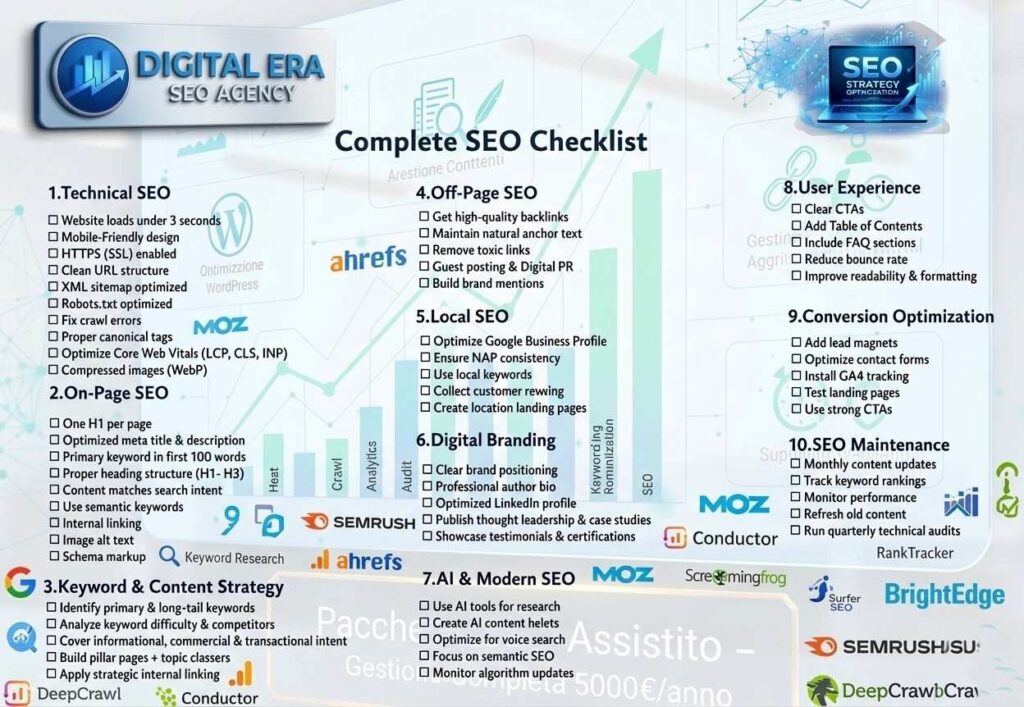
Digital Marketing vs SEO – Understanding the Foundation
What is digital marketing? What is SEO? In the current age of digitization, every realm of life has become digitalized. Understanding the digital world and its impact on both personal and professional life has become increasingly important.
Anyone who lacks basic digital awareness is at a serious disadvantage in today’s world. Anyone entering the field of SEO without a mid-level understanding of digital marketing is like jumping into the sea without learning how to swim.
Digital marketing refers to the techniques and practices used to promote products, services, brands, businesses, and ideas through digital channels and technologies. Unlike traditional marketing, digital marketing focuses on online platforms and social media channels to reach, engage, and convert audiences effectively and efficiently.
SEO is a critical component of digital marketing. It focuses on optimizing content, websites, products, and services for better visibility in search engines based on users’ search queries. Approximately 8.9 billion searches occur daily across search engines, with Google accounting for roughly 90% of the market share. SEO aims to display optimized results that match users’ search queries for products, services, information, or transactions.
SEO, or Search Engine Optimization, is the technique and practice of improving a website’s visibility and ranking on search engine results pages (SERPs). It revolves around optimizing various elements such as content, keywords, site structure, backlinks, and technical aspects to improve targeted organic (unpaid) traffic from users searching for relevant keywords.
Below is a professional overview of the differences between digital marketing and SEO from a pro level.
- Digital marketing is a broader term that reflects a set of skills applied to a variety of digital and social platforms for promoting and marketing products, services, brands, businesses, and content. SEO is part of digital marketing and a skill specifically geared towards a goal to improve the reach and engagement of products, services, brands, businesses, and content to their desired users through search engines.
- A digital marketer works with multiple skill sets, e.g., content writing, copywriting, video editing & graphic designing, social media marketing, paid ads, email marketing, etc. In comparison, an SEO expert is adept in the skill of optimizing the searchability of websites, content, products, services, and brands and businesses to align with search engine algorithms for better visibility.
- An SEO expert should also be familiar with broader digital marketing strategies as well. Digital marketing is highly dependent on many SEO practices to achieve desired results on several platforms and business-oriented targets like revenue goals. A digital marketer, while developing his/her strategies, can be dependent on an SEO expert. In summary, we can say that SEO plays a vital role in digital marketing, and its significance is increasing day by day.
- Digital marketing often includes paid strategies, while SEO primarily focuses on generating organic traffic.
- Digital marketing can bring immediate results through paid marketing strategies. In comparison, SEO is intended to bring organic results, and it is time-bound for at least 3 to 6 months. Understanding the concept of digital marketing is essential for mastering the roadmap of an SEO career.
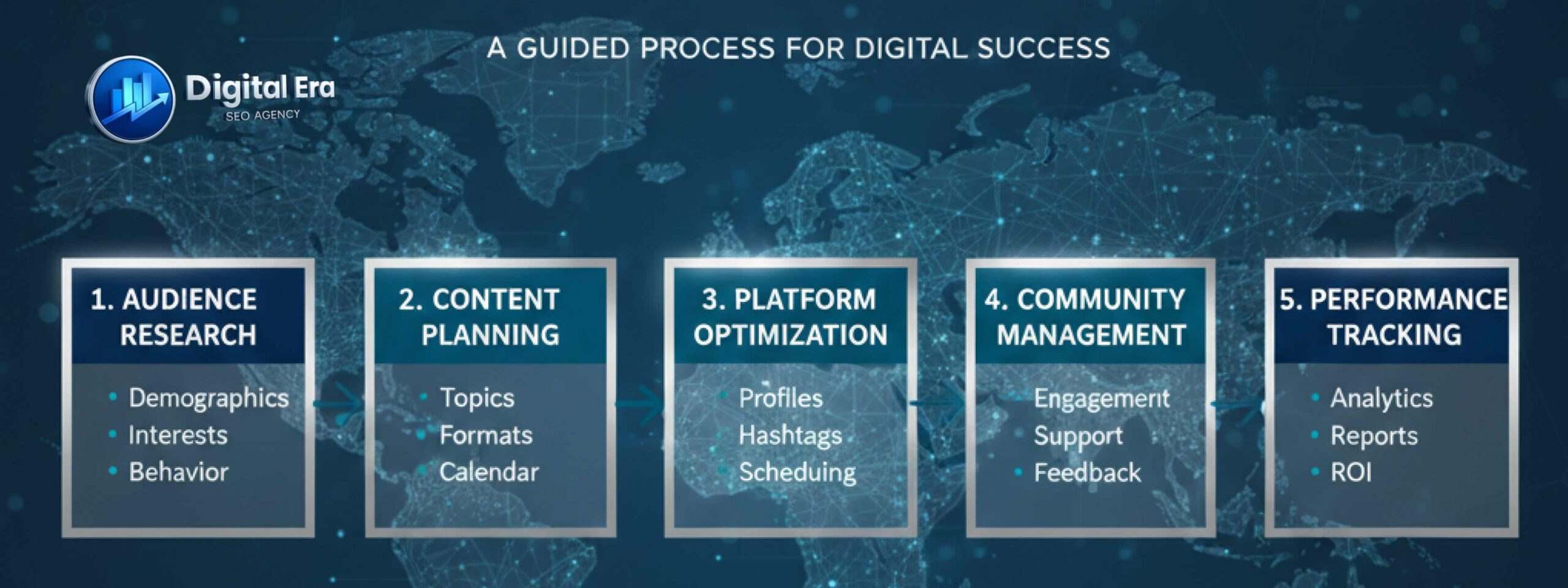
The Essential Link Between SEO Knowledge and Practice
Practice without theory lacks direction, and theory without practice remains untested. Knowledge is power, but converting knowledge into power requires the application of knowledge. Once you have a clear understanding of the theory, start applying it to gain experience. This is the essential link that must be established to become an expert from a beginner.
At the start of your career in the SEO field, you must strive to gain foundational knowledge: familiarity with SEO terms, associated technologies, tools, techniques, and important concepts of search engine rankings. The aforementioned knowledge will enable you to improve your capability of assessing client needs and project requirements and utilizing tools and techniques with perfection for optimal output.
Practice leads you towards hands-on experience. Real-world problems make you learn the real challenges of projects and their complexities. At the start of their careers, most beginners don’t have mastery of applying the right strategy and utilization of tools for desired tasks.
All third-party tools produce different results. If we name the popular tools used in SEO practice, they are Semrush, Ahrefs, Screaming Frog, and All in One SEO. Google tools that assist SEO data analysis and performance tracking include GA4, Google Search Console, Tag Manager, PageSpeed Insights and Looker Studio.
Mastering the above-mentioned tools is the first requirement for developing excellence in the field of SEO. Another brilliance that adds value to your expertise is knowing which tools to use for what purpose, when to use them, where to use them, and how to use them. Because variations in results across different tools often create confusion for beginners
Practicality improves your intelligence in assessing problems and challenges without using tools as well. Sometimes excessive reliance on tools causes an inability to fix problems without experience and personal IQ.
Below are a few tips mentioned for practical exposure:
- You must start learning practically under the guidance of an expert and experienced professional with a solid background in theory and hands-on experience.
- It is highly recommended to work on live projects. Otherwise, you must have your own website to start practice.
- Seek guidance from a professional on each and every aspect of on-page, off-page, technical, and local SEO concepts and their implementation.
- Research has core importance in learning skills and improving your experience.
- Develop awareness about technical terms used in SEO.
- Study industry and market trends, along with customer needs.
- Identify your areas for improvement during the learning and implementation.
- Career seekers sometimes also focus on sub-skills, e.g., on-page, off-page, and local SEO.
- Don’t pursue advanced concepts of SEO. Semantic, programmatic, and parasitic SEO are such examples of advanced SEO. It might create confusion unless your core concepts are clear and strong.
- Try to learn from case studies and research blogs by examining top-ranked and well-indexed websites, their content structure, and the strategy used.
- Also, it is highly recommended to gain experience in how to work with a team. SEO is not an individual task. You will need assistance from graphic designers, content writers, and web developers.
Bird’s-Eye View of Types of SEO for Beginners
From a beginner’s point of view, understanding core concepts of SEO has vital significance. Advanced concepts of SEO are fundamentally derived from basic types of SEO. It is too early to discuss advanced concepts of SEO without having a strong base of core concepts of SEO.
The core types of SEO necessary for building SEO skills are:
On-Page SEO: Optimizing What Users See
On-page SEO pertains to on-page elements of a web page. Briefly, on-page elements of a web page include content (text, headings, images, videos, and graphics), meta titles, meta descriptions, and URL structures. It’s called “on-page” because it primarily optimizes elements of a web page that are visible to users from different angles.
While using a website, users interact with the content of the web page, the design, and the graphics. Users experience the website’s niche through its title, meta description, page heading structure, and URL structure. Search engines interact deeply with those websites that are optimally built in the context of the aforementioned elements.
Keyword Research:
Keyword research is the foundational step in developing an effective SEO strategy. It is the process of identifying the potential words and phrases that users use to search for specific products, services, information, topics, or related content of search engines. These words and phrases are known as keywords or search queries, while “niche” refers to a specific market segment or industry category. Proper keyword research helps you understand user intent, target relevant traffic, and craft content that aligns with what your audience is actively searching for.
Without proper keyword research, even well-optimized websites struggle to rank because they target the wrong audience, wrong intent, or wrong search queries.
Keyword research involves:
- Discovering relevant search terms
- Understanding user intent related to those terms
- Evaluating search volume and competition level
- Mapping keywords to appropriate content pages
In simple words, keyword research answers three critical questions:
- What are users searching for?
- Why are they searching for it?
- How difficult is it to rank for that query on search engines?
Effective keyword research ensures your content aligns with real search demand rather than assumptions.

Search Intent Types:
Understanding a search query decides about search intent types. Selecting the right keywords and phrases is crucial for creating content that satisfies user search intents. The main types of search intent include
- Informational Intent
Users are searching for knowledge, answers, guidance, or research.
Examples:
- “What is SEO?”
- “How does technical SEO work?”
- “SEO beginner guide”
Best content format:
- Blog posts
- Guides
- Tutorials
- Educational and informational articles
Transactional Intent
Users are looking to make some transactions for products or services.
Examples:
- “Hire SEO expert”
- “SEO services pricing”
- “Buy SEO audit tool”
Best content format:
- Service pages
- Landing pages
- Product pages
Navigational Intent
Users want to visit a specific website or brand.
Examples:
- “adidas”
- “Nike”
- “Windows operating system”
Best content format:
- Brand pages
- Homepage optimization
Commercial Intent
Users are researching options before buying.
Examples:
- “Best SEO tools”
- “Semrush vs. Ahrefs”
- “Top SEO certification courses”
- “Best online degree”
Best content format:
- Education and academic blogs
- Research articles
- Case studies
Understanding intent helps structure content correctly and improves ranking stability.
Keyword Types
Not all keywords are equal. Different keyword categories serve different strategic purposes.
- Short-Tail Keywords
Broad, high-volume, highly competitive keywords comprise 1 to 2 words.
Examples:
- SEO
- Digital marketing
- Keyword research
Long-Tail Keywords
More specific and comprising 3 to 5 words and less competitive.
Examples:
- “SEO roadmap for beginners”
- “How to learn technical SEO step by step”
Long-tail keywords are highly recommended for beginners.
Branded Keywords
Keywords that include specific brand or product names.
Examples:
- “Nike Shoes”
- “Armani Clothes”
These keywords help in brand positioning and authority building.
Semantic or Related Keywords:
Semantic or Related Keywords are contextually related terms, or in different form, words and phrases that help search engines (Google, Bing) understand content queries.
Example for “SEO”:
- On-page optimization
- Backlinks
- SERP
- Crawling
- Indexing
- E-E-A-T
Semantic relevance improves topical authority and ranking potential.
How to Analyze SERP (Search Engine Results Page)
ranking on Google.
Steps:
- Search the keyword manually.
- Analyze top-ranking pages of competitors.
- Identify content type (blog, article, landing page, image).
- Evaluate content depth and structure.
- Observe featured snippets, People Also Ask (PAA), and FAQs related to content.
SERP analysis prevents strategic mistakes and helps align with algorithm expectations.
Keyword Difficulty
Keyword Difficulty (KD) measures the intensity of competition and difficulty of ranking a specific keyword on a search engine (Google, Bing).
It depends on:
- Domain and page authority of competitors
- Number and quality of backlinks
- Content structure, depth, and topic coverage.
- Search intent alignment against users’ queries.
For beginners:
- Target low- to medium-difficulty keywords
- Build authority gradually.
- Focus on long-tail opportunities
Avoid highly competitive keywords in the early stages unless your domain has strong authority.
Competitor Keyword Gap Analysis
Keyword gap analysis identifies keywords used by our competitors for ranking, but we are lacking those keywords in our content.
Process:
- Identify top competitors in a specific niche.
- Analyze competitors’ ranking keywords.
- Filter keywords relevant to your target audience.
- Identify gaps in your content strategy.
This method helps:
- Discover potential opportunities
- Expand topical coverage
- Build strategic content clusters
Topic Clustering
Topic clustering involves grouping related keywords around a central pillar topic. This method enhances topical authority and helps improve rankings for multiple related keywords by developing comprehensive, deep content.
Topic clustering involves:
- Creating a pillar page (broad topic)
- Supporting it with cluster content (related subtopics)
- Interlinking strategically with related blogs, articles, and content pages.
Example:
Pillar Page:
“Complete SEO Beginner Guide”
Cluster Topics:
- On-page SEO
- Technical SEO
- Keyword research
- Link building
- Local SEO
This structure improves:
- Crawlability
- Semantic relevance
- User experience
- Internal linking strength
Content Mapping
Content mapping implies that every keyword has a designated page. Content mapping ensures that each page is optimized for its target keywords and user intent, creating a seamless user experience.
It prevents:
- Keyword cannibalization
- Duplicate targeting
- Structural confusion
A properly mapped site architecture strengthens SEO performance and ranking stability.
In the real world, SEO keyword research transforms theoretical strategy into an action plan to bring measurable results.
Keyword research expertise ensures creating every piece of content with intent and niche-related direction and ranking potential.
- Understanding user psychology
- Matching search intent
- Creating semantic depth
- Building topical authority
- Structuring content strategically
Check and analyze the above content. Provide a rating. Check plagiarism and humanization. suggest ranking potential. If there is any error, mention that and suggest fixes also. final verdict with tabulated rating and analysis.

Off-Page SEO: Building Authority and Trust
In contrast to on-page SEO, off-page SEO is performed outside the web page to build backlinks for our website and link our website to authoritative, relevant, high-traffic websites through influencer outreach and reviews. Off-page SEO is performed to improve rankings through authoritative signals from well-ranked external websites.
Focus on quality (domain authority, relevance) over quantity to avoid penalties from search engines and to tell search engines like Google your content is trustworthy, boosting E-E-A-T (Experience, Expertise, Authoritativeness, Trust).
Technical SEO: The Website’s Foundation
Technical SEO involves working on the technical infrastructure of a website to make it search engine friendly. Technical SEO ensures that a website is search-engine friendly, fast, secure, and easy for both users and search engine bots to access and understand. Technical SEO ensures that search engines can crawl, index, and rank its pages more efficiently.
Technical aspects of the website include:
- Website crawling & indexing
- Site speed & performance
- Mobile-friendliness
- Site architecture & URL structure
- HTTPS & security
- Core Web Vitals
- Fixing technical errors
- Structured data (schema markup)
Crawling
The process of discovering web pages by scanning search engine bots is called crawling. Crawling is the discovery process in which search engine bots fetch web pages by following links across the web. Crawling does not determine ranking or quality; it simply discovers and retrieves pages for further processing. Content evaluation occurs during indexing and ranking.
Indexing
Storing and organizing crawled web pages in a search engine database is the indexing process. When a website and its pages are indexed, it signals that the site is properly structured as per the analysis of the search engine bot, and these pages can appear in search results.
Ranking
Ordering indexed web pages on search engine results pages (SERPs) depends upon:
- Relevance to search query
- Authority (backlink profile quality)
- Content depth and topical coverage
- Search intent alignment
- Technical performance (Core Web Vitals)
- User engagement signals
Search engines use algorithms to decide which pages appear first for a specific search query. Ranking is the competition, contest, or marathon for which SEO is performed.
Achieving rankings is like winning a marathon, but it’s an ongoing process. Once a ranking is attained by a website or content, it does not mean it is everlasting. SEO is a long-term and ongoing process. It needs determination to acquire ranking, and you should keep putting in efforts to maintain that ranking because in a marathon other contestants are also competing with a very close margin.
Local SEO: Winning the “Near Me” Searches:
The process of optimizing a business, brand, service, product, or website with the goal of increasing its visibility in local search results. Targeting a specific area, city, vicinity, or geography is the main intent of local SEO.
Local SEO helps users to find products, services, businesses, and brands in their local area based on the relevance and intent of their searches. Local SEO plays a pivotal role for small businesses and services aiming to target audiences within their local business area. The best examples of locally optimized businesses are gyms, salons, doctors, hospitals, handyman services, HVAC services, plumbing services, car rentals, restaurants, etc.
Key Elements of Local SEO:
- Google Business Profile optimization (GMB)
- Local keywords and location-based content
- NAP consistency (Name, Address, Phone number)
- Local citations and business listings
- Customer reviews and ratings
- Local backlinks
- Map and location signals
These services are often searched with the keywords “near me.” So all those businesses, services, and products that come under the scope of “near me” searches fall under local optimization.
SEO Ethics: White Hat, Black Hat, and Gray Hat
White Hat SEO
Following search engine guidelines ethically to help search engines index websites that provide valuable, genuine content to users is white hat SEO.
Key characteristics:
- High-quality, original content
- Proper keyword usage
- On-page optimization
- Technical SEO best practices
- Earning natural backlinks
- Focus on user experience
Objective: Safe, long-term, and sustainable rankings.
Black Hat SEO
Violating search engine guidelines and algorithms to optimize websites and attain manipulated rankings in search results. Black hat SEO focuses on exploiting algorithms’ loopholes rather than ethical guidelines of search engines to deliver valuable, genuine content.
Key characteristics:
- Keyword stuffing
- Cloaking
- Hidden text or links
- Spam backlinks
- Duplicate or auto-generated content
Objective: Short-term and misleading gains with a high risk of penalties, ranking loss, or website removal from search results (Manual action penalty).
Gray Hat SEO
Gray hat is a blend of white and black hat SEO. Practices that are not clearly defined as either allowed or prohibited by search engine guidelines. These techniques fall between white hat and black hat SEO and carry moderate risk. Some algorithms of search engines are followed and violated.
Key characteristics:
- Slightly aggressive link building (off-page)
- Content automation with manual control (on-page)
- Expired domain usage (technical)
- Mild manipulation without direct rule-breaking (Search Engine Guidelines)
Objective: Faster results than white hat, but with potential risk if algorithms change.
Advanced Concepts of SEO
Here advanced concepts of SEO will be discussed briefly. The reason is that once a beginner has a strong foundation in core SEO, then it is advised to explore advanced SEO concepts that help beginners gain a clear understanding of these concepts, better comprehension, and sustained learning. These strategies often involve deeper technical, analytical, and content-focused practices.
Semantic SEO
Semantic SEO aims to ensure that a website’s content matches the meaning and users’ search queries in response to a question (long-tail keyword). Users search with long-tail keywords or topics, not just individual keywords.
Semantic SEO entails creating content that answers users’ questions comprehensively, using related terms, and organizing topics in a way that search engines can understand the overall context of a page.
Semantic SEO helps search engines understand what your content is really about and connect it to the right searches, improving relevance and ranking. Understanding search intent (informational, transactional, navigational).
Programmatic SEO
This advanced concept of SEO focuses on creating the automation and optimization of a large number of web pages to target many search queries at scale. In programmatic SEO, automation and optimization are key differences by using data, templates, and automation to generate content quickly while maintaining relevance and optimization.
Ideally, programmatic SEO is used for websites with thousands of items, like e-commerce, real estate listings, job boards, or directories. Techniques utilized for such optimization are scripts, tools, or CMS features to automatically generate optimized pages.
Voice Search & AI Optimization
With the intent to optimize content for voice search to perform well in voice-based searches and AI-driven search results. With the rapid increase of voice assistants (like Google Assistant, Siri, and Alexa) instead of typing search queries. Search intent focus: Understand whether the user wants information, directions, or a purchase. Create content that directly answers users’ questions through voice search.
SEO and AI Blend for Optimized Results
Challenges often bring opportunities. Entering the AI era is the biggest opportunity, but there are threats as well. Converting threats into opportunities requires professionalism and intelligent strategies that come with game-winning techniques.
The emergence of AI has revolutionized the IT industry and has similarly transformed SEO. AI-powered tools are no longer optional but essential to meet the challenges of a competitive market. Understanding this blend is crucial for modern SEO practitioners seeking to maximize efficiency and results.
AI has transformed key elements of SEO like keyword research, website audits, content creation, and interpreting content quality and relevance. Search engine algorithms work more efficiently to interpret user intent, crawling, indexing, and ranking websites. AI-driven search algorithms prioritize semantic understanding over simple keyword matching.
SEO professionals should use AI tools to analyze top-ranking content, identify content gaps, predict search trends, and generate data-driven content briefs. But at the beginning of your career, don’t rely on AI tools heavily.
Relying on AI tools may deter your competence in developing SEO strategies from your own creativity and thinking. However, human expertise will remain irreplaceable for strategy, creativity, and quality assurance. The most intelligent approach combines AI efficiency with human insight and critical thinking.
The future challenges of an SEO career demand professionals who can leverage AI tools while maintaining strong foundational knowledge from top to bottom. Mastering this balance will enable you to deliver faster, more accurate, and data-driven optimization results and strategies. Search engines are becoming increasingly AI-dependent, and this trend will continue to grow.
Developing your skill in how to work alongside these technologies becomes not just an advantage but a necessity for career growth and client success in the SEO industry in the future. Maintaining a strong focus on quality and E-E-A-T principles will sustain your professional growth.
SEO Career Growth and Market Competition
Hard work and determination are key to success. Pursue your career strategically. Set time-bound goals. Research current and upcoming market trends. Explore your career-related opportunities and challenges. Do not pursue advanced concepts until you have mastered the fundamentals. Interact with industry professionals, influencers, and leaders.
A few practical tips for exploring career growth opportunities and competition:
- Always keep your knowledge up to date. Keep yourself learned in market-driven strategies, advancements, and in-demand market skills.
- At the start of your career, maintain a strong foundation in core knowledge from the evolution of SEO skills to date and prevailing techniques.
- Become adept at using and applying modern tools of SEO. This must include expertise in using plugins, third-party tools, AI-based tools, search engine recommendations, and their guidelines.
- Try to create networking with industry leaders and influencers. Get their recommendations, and gain experience and confidence from their knowledge and professional skills.
- Keep searching for job advertisements related to SEO. Keep focused on the job description and job specification they publish. Job descriptions will help you understand what experience and expertise are in demand. Job descriptions will show you what is required to secure a job or project. This will also help you to know about tools and techniques requisite to stay and compete in a career.
- Earn professional certifications to gain accreditation for your skills. These certifications add value to your profile and professional growth. Certifications validate your knowledge, while experience validates your expertise.
- Go under the mentorship of an experienced professional; this will help you gain valuable experience more quickly.
Challenges of an SEO career include fierce competition, whether you pursue freelancing or seek employment, or start an SEO agency. The reason for fierce competition is the high demand for SEO skills and the global availability of talent. Remote and on-site job arrangements, lack of job-hunting techniques, meeting employers’ criteria as per desired skills and experience, and client confidence in delivering results on time and within budget.
Salary or project budget expectations—all the above factors contribute to facing market competition. Employers prefer experienced professionals to whom they can assign projects, those who exhibit a diversified portfolio of their clients whom they have already served and delivered substantial results to. At the start of a career, the lack of experience in building a portfolio, winning a client’s confidence, and executing projects with precision and commitment causes fierce competition. It is highly advised to understand the dynamics of market competition and align yourself in a shorter time.
Below mentioned are a few tips recommended to beat the competition:
- First 6 months: Build skills, create a portfolio (may earn little/nothing)
- 6-12 months: First clients/job, $500-1000/month or entry salary
- 1-2 years: Consistent income, building reputation
- 3+ years: Established professional, higher recognition of your skill
Develop Your Brand and Recognition Acquisition
Branding is not only important for a product, service, or business but also for a person with exceptional skills and talent. Branding is ineffective unless you showcase the value of your product, service, or expertise. Personal branding transforms SEO freelancers from invisible to highly visible professionals.
In the competitive SEO landscape, building a personal brand is your gateway to standing out, attracting clients, and earning recognition. You need to develop a brand as an extension of your expertise—rooted in E-E-A-T principles (Experience, Expertise, Authoritativeness, Trustworthiness).
Recognition follows consistent effort. Over time, client referrals and positive reviews will solidify your reputation. Remember, authenticity drives trust; avoid shortcuts like black hat tactics that could harm your brand.
Client acquisition begins with visibility. Leverage networking from your career growth phase. Offer value-first approaches such as free SEO consultations or content upgrades to potential and targeted clients through social media and other business development channels. Offer free website audits or consultation calls to demonstrate immediate value.
Develop a personal website optimized with SEO best practices; this serves as both your portfolio and a demonstration of your skills in action. Build referral networks with complementary service providers like web developers, graphic designers, and digital marketing agencies who can recommend your services to their clients.
Mastering branding, recognition, and client acquisition accelerates career momentum. Within 6-12 months, earnings can scale from entry-level projects to high-value contracts. Stay persistent; your brand is your most powerful SEO tool for long-term success.
Conclusion
In this comprehensive guide, you have explored everything from the foundational concepts of digital marketing and SEO to the core types of SEO: on-page, off-page, technical, and local SEO.
We’ve discussed ethical practices like white hat versus black hat techniques. We’ve explored the powerful blend of knowledge and practice. The significance of personal branding to elevate your professional presence has been emphasized. The critical and transformative role of AI in modern SEO, career growth strategies, and market competition.
As a beginner, remember that SEO is not just a skill but a dynamic skill that rewards patience, continuous learning, and ethical application of knowledge and practice.
The roadmap to become an SEO expert may seem daunting at first, but with a strong foundation in theory, hands-on experience, and adaptability to emerging trends like AI and voice search, you’ll be well-equipped to navigate real-world challenges and seize global opportunities. Build your portfolio, network with professionals, and focus on delivering value through E-E-A-T principles.
SEO isn’t a sprint but an ongoing marathon demanding adaptability, creativity, and a user-focused mindset. Start today with the principles discussed above, refine your skills through practice, and advance your career. Your journey to becoming an SEO expert begins now.
Frequently Asked Questions
Can I learn SEO without any technical background?
A technical background is not required for SEO; SEO has many facets. Yes, but superficial technical knowledge can help you learn more quickly because a blank slate lacking technical knowledge could be more challenging in the learning phase. However, as you progress, there should be a willingness to continuously improve your knowledge about coding, CMS, SEO plugins, and AI. Start with the non-technical parts and gradually build up your technical confidence and expertise.
Should I focus on Google only or optimize for other search engines?
Google dominates the market with a 90% share on the internet. Google’s guidelines, algorithms, and best practices will give you skills that translate well to other engines like Bing, DuckDuckGo, or Baidu. Gaining expertise in Google’s guidelines and algorithms drives confidence and expertise to tackle other search engines’ SEO challenges. A beginner’s aim should be to focus on Google’s SEO-related practices.
Should I specialize in one type of SEO or learn everything?
Aiming for a solid understanding of all core areas—on-page, off-page, and technical SEO—will bring in-depth learning to handle customer queries and understand how issues connect while handling a project. This core skill set (broad knowledge instead of one deep specialty) makes you versatile. Such versatile knowledge is essential for developing a winning strategy for clients. So it’s better to learn everything while specializing in one type of SEO.
Can I practice SEO without a real website or clients?
It is highly recommended (99% of the time) to practice on real, live projects or to have your own or a client’s website for practice. Until you handle issues of real projects, you won’t gain experience in implementing strategies, using tools, analyzing issues, and applying your skills to resolve those issues. Without real-world practice, mastering SEO is impossible.
What are the essential SEO tools I should master?
There is a range of tools essential for SEO. These tools are used for on-page, off-page, technical, and local optimization. One should be well familiar with which tools assist in tackling what types of SEO. For each type of SEO, there are several tools used by SEO experts depending upon their command of tools and how comfortable and confident they feel to achieve desired results for SEO. It is pertinent to mention here that with experience, beginners may develop their intuition for mastering on-page, off-page, technical, and local SEO tools.
Which SEO certifications are worth getting?
Is freelancing better than getting an SEO job?
Freelancing and SEO jobs both have their own scope and career paths. It depends upon one’s experience, expertise, career goals, and financial growth target. Choosing between freelancing and a job varies.
Share The Article
Written By

Waqas Ayub
SEO and Guest Blogging Expert
Waqas Ayub is an SEO specialist and copywriter who helps businesses grow through search engine optimization, strategic content, and digital marketing. He shares practical SEO insights, industry updates, and actionable tips to help marketers and businesses improve their online visibility.